
Exploring Ohio's Evolving Hemp Industry: Applications and Insights
2/7/20262 min read
Introduction to Ohio's Hemp Industry
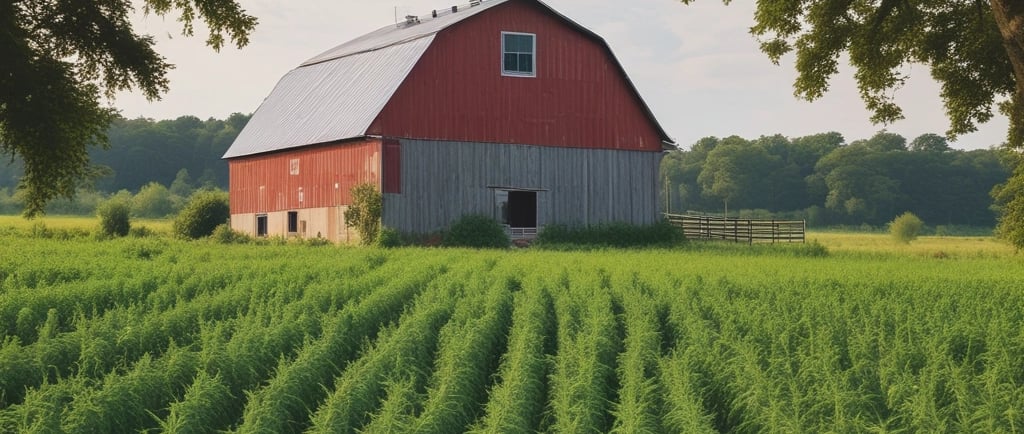
In recent years, Ohio has witnessed a significant transformation in its agricultural landscape, largely due to the emerging hemp industry. This evolution has sparked interest from farmers, entrepreneurs, and investors alike, reflecting a broader national trend toward the acceptance and utility of hemp. The burgeoning sector presents multiple applications, ranging from textiles to food products, thus shaping a promising future for the state's economy.
Applications of Hemp in Ohio
The applications of hemp are diverse and continually expanding. First and foremost, industrial hemp is cultivated to produce textiles, paper, and biodegradable plastics, which serve as sustainable alternatives to traditional materials. Additionally, hemp seeds and oil have gained attention for their nutritional values and are increasingly found in health food markets across the state.
Moreover, hemp is lauded for its potential in the construction sector. Hempcrete, a composite of hemp hurds and lime, is gaining traction as an eco-friendly building material. This natural product not only provides structural benefits but also enhances the energy efficiency of buildings. As Ohio's economy continues to evolve, the demand for sustainable construction materials will likely rise.
Insights into the Future of Ohio's Hemp Industry
As Ohio adapts to the growing hemp market, there are several considerations for the industry’s future. Regulatory frameworks play a crucial role in shaping the development of hemp cultivation and processing. Since the legalization of hemp production in the 2018 Farm Bill, Ohio has established policies to support farmers and processors, ensuring compliance while fostering growth.
Furthermore, research and education are pivotal for the sustainable development of the hemp industry in Ohio. Agricultural universities are increasingly engaged in researching hemp varieties, cultivation methods, and market applications, which provides farmers with the insights needed to thrive. Collaboration with local businesses and broader networks can create innovative solutions that leverage Ohio's agricultural strengths.
In conclusion, Ohio's evolving hemp industry exemplifies a dynamic interplay between agricultural innovation and sustainability. As applications broaden and regulatory landscapes shift, the state's hemp sector stands poised for growth, reflecting an exciting chapter in Ohio's agricultural narrative. Continued investment in research, coupled with robust education initiatives, can further enhance the industry’s trajectory, making it a key player in the state’s economy.